Updated on: 19 Jan 2026 | By Actual Article

We have all been there. You walk into a store for a single gallon of milk and walk out with three bags of groceries, a limited-edition candle, and a discounted pair of headphones you didn’t know you needed. You didn’t "fail" at shopping; you were simply outmaneuvered by some of the most sophisticated psychological architecture ever designed.
In the modern marketplace, every color, scent, and price tag is a calculated move in a high-stakes game of chess. Big brands aren't just selling products; they are hacking your biology. This 3,000-word deep dive explores the invisible forces—from neuromarketing to digital algorithms—that drive us to overspend and how you can reclaim your rational mind.
Meet Sarah. She wakes up and scrolls through Instagram. Within five minutes, she sees a "See First" post from a favorite influencer wearing a "limited edition" sustainable linen set. Her brain registers Social Proof and Scarcity. She doesn't need clothes, but the "Fear of Missing Out" (FOMO) kicks in.
At lunch, she visits a site that uses Digital Frictionless Tracking to recommend a pair of sneakers that "match her style." She clicks "Buy Now" with a single-click payment method, bypassing the "Pain of Paying". By the time she gets home, passing a grocery store that pumped the scent of fresh bread into the air to trigger hunger; she has spent $300 without ever making a conscious, rational decision.
Sarah isn't irresponsible; she is simply living in an environment designed to exploit her neurobiology.
Discounts and sales offers are the most direct triggers of impulse buying. When you see a "50% OFF" sign, your brain’s pleasure center—the ventral striatum—releases dopamine. This chemical hit creates a "buy high" that temporarily shuts down the prefrontal cortex, the part of the brain responsible for rational decision-making.
Brands like Amazon (with Prime Day) and retailers during Black Friday use Scarcity Tactics to create a sense of urgency. According to Robert Cialdini’s "Principles of Persuasion," when an item is perceived as rare or "limited time only," its perceived value skyrockets. We aren't just buying a product; we are competing for a prize.
During the COVID-19 pandemic, "Panic Buying" became a global phenomenon. Brands quickly realized that highlighting stock levels (e.g., "Only 3 left in stock!") triggered a survival instinct in consumers, leading to hoarding behaviors that persisted even as supply chains stabilized.

Why will someone pay $1,200 for an iPhone when a $400 Android does the same thing? Or $2,000 for a Gucci bag made of canvas? The answer lies in Social Signaling and the Halo Effect.
Luxury brands like Louis Vuitton and Apple don't sell utility; they sell a "version of yourself." Research shows that luxury goods act as "Veblen goods"—items for which demand increases as the price increases because they signify status.
The obsession with the latest smartphone models is driven by Planned Obsolescence and Social Signaling. Research shows that the perceived "obsolescence" of a six-month-old phone is purely psychological. Brands use "incremental innovation" to make previous models look "dated" through aesthetic changes rather than functional ones, tapping into our innate desire to stay at the top of the social hierarchy.
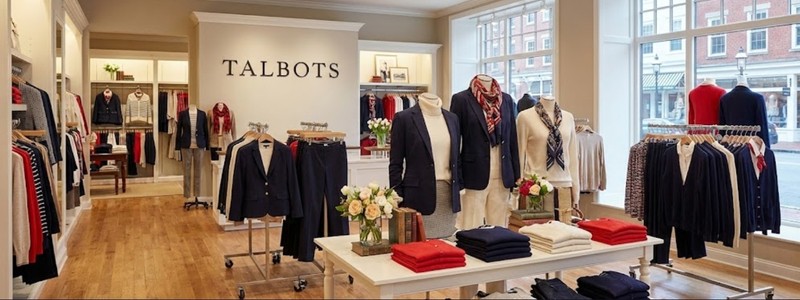
The physical layout of a store is a psychological labyrinth. Ever notice why milk and bread are always at the back of the supermarket? It forces you to walk past thousands of high-margin items.
While many brands focus on the features of a product, industry giants like Coca-Cola focus almost exclusively on "Affective Conditioning." They don’t sell a carbonated beverage; they sell "Happiness." By consistently pairing their product with images of family, holidays (the iconic polar bears), and friendship, they bypass the logical brain and create a Pavlovian response where the brand itself becomes a symbol of positive emotion.
On platforms like Instagram, the use of influencers is a masterclass in social proof. When a consumer sees a "relatable" influencer using a product, the brain perceives it not as an advertisement, but as a recommendation from a friend. This triggers the Parasocial Interaction (PSI) theory, where we develop a one-sided bond with the creator. This trust leads to higher conversion rates than any traditional celebrity endorsement could achieve.
Neuromarketing is the study of the brain’s responses to marketing stimuli using EEG and fMRI scans. It moves beyond what people say they like and looks at what their brains actually crave.
|
Feature |
Traditional Marketing |
Neuromarketing |
|
Data Source |
Surveys & Focus Groups |
EEG, fMRI, Eye-Tracking |
|
Consumer Feedback |
Conscious (What people say) |
Subconscious (Brain activity) |
|
Tactics |
Emotional Storytelling |
Sensory Triggers (Scent/Sound) |
|
Effectiveness |
High variance |
High precision/Predictive |
A critical question remains: Can brands balance sales goals with responsible marketing? In 2025, a shift is occurring. "Conscious Consumerism" is forcing brands to choose between short-term manipulation and long-term loyalty.
Brands use "Price Anchoring" and the "Decoy Effect" to manipulate your perception of value.

|
Tactic |
How it Works |
Example |
|
Decoy Pricing |
An inferior option makes a premium one look better. |
Subscription tiers (Basic/Pro/Enterprise). |
|
Charm Pricing |
Prices ending in ".99" feel significantly cheaper. |
$9.99 vs. $10.00. |
|
Bundling |
Grouping items to hide the cost of individual parts. |
Fast food "Value Meals." |
|
Anchoring |
Placing an expensive item next to a target item. |
Menus with a $100 steak at the top. |
In the digital age, manipulation is personalized. Algorithms on Facebook, Instagram, and Amazon analyze your "Digital Exhaust"—the trail of clicks and likes you leave behind—to predict your next impulse.
Social media creates a "Fear of Missing Out." Instagram's "See First" and "Limited Drop" alerts are designed to keep your brain in a state of high-alert anxiety. When you see an influencer using a product, your brain activates "Social Proof." If "everyone" has it, your lizard brain tells you that you are at a survival disadvantage if you don't.
Social media platforms like Facebook and Instagram use specific features to manipulate the "Availability Heuristic"—the mental shortcut that relies on immediate examples that come to mind.
|
Digital Feature |
Psychological Trigger |
Target Outcome |
|
Targeted Ads (Facebook) |
Personalization Bias |
Reduced resistance to "irrelevant" ads. |
|
"Limited Stock" Alerts |
Loss Aversion |
Immediate purchase without price comparison. |
|
One-Click Ordering |
Frictionless Transaction |
Eliminates the "Pain of Paying." |
|
Influencer Posts |
Social Proof / PSI |
High trust and emotional conversion. |
The more "friction" there is in a transaction, the less we spend. This is why brands strive for "Frictionless Payments."
MIT researchers found that people are willing to pay up to 100% more for the same item when using a credit card compared to cash. Why? Because cash involves the "Pain of Paying"—physically seeing money leave your hand. Credit cards, Apple Pay, and Amazon’s "One-Click Ordering" disconnect the pleasure of the purchase from the pain of the expense.

Overspending isn't just a financial issue; it's a mental health crisis.
The most effective tactics include Scarcity (Limited editions), Reciprocity (Free samples), and Authority (Expert or influencer endorsements). Together, these bypass the "Thinking" brain and target the "Feeling" brain.
In many societies, "Conspicuous Consumption" is a way to signal social mobility. Cultural norms that equate material wealth with success drive individuals to spend beyond their means to maintain a certain "social facade".
Chronic overspending leads to "Financial Infidelity" in relationships and high levels of stress. Long-term, it can lead to Shopping Addiction (Oniomania), which is often a coping mechanism for underlying anxiety or depression.
Yes, through Mindful Consumption. This involves recognizing the "Urge" as a physical sensation (dopamine) rather than a rational need and practicing "Intentional Friction" (e.g., deleting saved credit card info).
Regulators can address overconsumption by enforcing "Dark Pattern" bans—illegalizing website designs that trick users into subscriptions or hidden costs. Additionally, mandatory "cooling-off periods" for high-interest credit products could curb impulsive financial decisions.
You can't change your biology, but you can change your environment. Here is a practical checklist to resist manipulation:
The ultimate defense against overspending is the adoption of a Sustainable Lifestyle. As noted in the 2025 trends, sustainability is no longer a niche choice but a financial necessity.

The battle for your wallet is won or lost in the milliseconds before you reach for your card. By understanding that brands are using science—not just luck—to influence you, you can begin to view the marketplace through a critical lens.
Marketing can be a tool for good, but in the hands of global giants, it is often a tool for exploitation. Your best defense is awareness. The next time you see a "Must-Have" item or a "Once-in-a-Lifetime" deal, take a deep breath, recognize the dopamine spike for what it is, and walk away. Your brain—and your bank account—will thank you.
Expert Insight: “The most powerful person in the room is the one who knows how their own mind works. Brands spend billions to understand you; it’s time you spent a little time understanding them.”
Action Item: Share this guide with one friend who is trying to save money this year. Understanding the "Why" is the first step to changing the "How."